A challenge to implementing consistent, meaningful letters and sound work with my students has of course been the planning and prep work needed to support instruction that is efficient, predictable, and easy for myself and support staff to implement across different learning profiles. However, thoughtful planning and front-loading some prep work has led me to create me a Letters and Sounds Home Base Template, which I will walk through and provide for your personal classroom use.
My classroom team uses Google Drive as our primary hub for lessons, materials, schedules, and data collection. Recently, Google Docs added a great feature that allows users to add Tabs and Sub-tabs to a single document; this has been a huge timesaver for me and has provided some great opportunities for effective organization for my team and students.
Tab 1 – Letters and Sounds Overview
The first page of the document is an overview of the Working with Letters and Sounds block as well as a general lesson plan that allows for repetition with variety.* This introduction page serves as a reminder to adults and language partners of the purpose of this block and helps ground ourselves in providing natural and meaningful opportunities for learning. The document opens with a guiding practice statement for adults:
Working with Letters and Sounds is an integral part of our learners’ literacy journey. Alphabet learning should be embedded in our daily routines and activities; we can always be highlighting letters and their sounds. The key is to make sure we aren’t “quizzing” students about the alphabet; instead, we are providing natural and meaningful opportunities to see letters and sounds in action.
It is also in this section that I establish a learning goal and Guiding Overarching Goals:
Lesson Block goal:
– I can make connections between letters and their sounds.
Guiding Overarching Goals :
– Text is a code for speech.
– Print has meaning.
– What we can say, we can write.
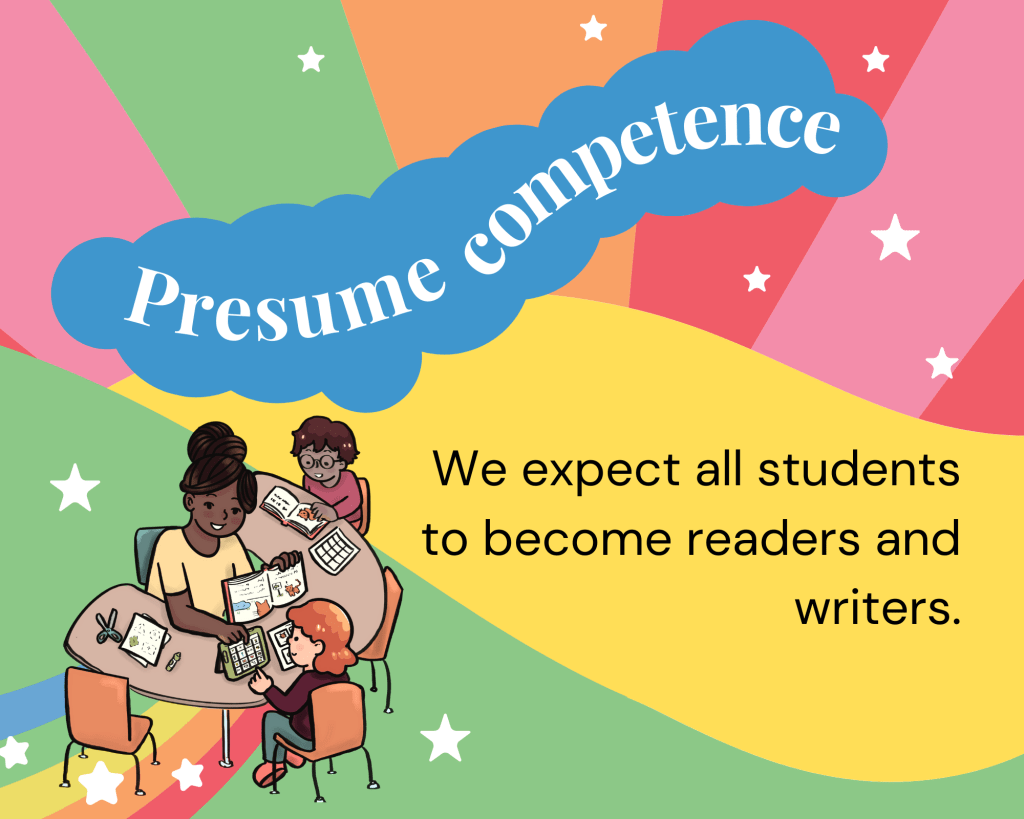
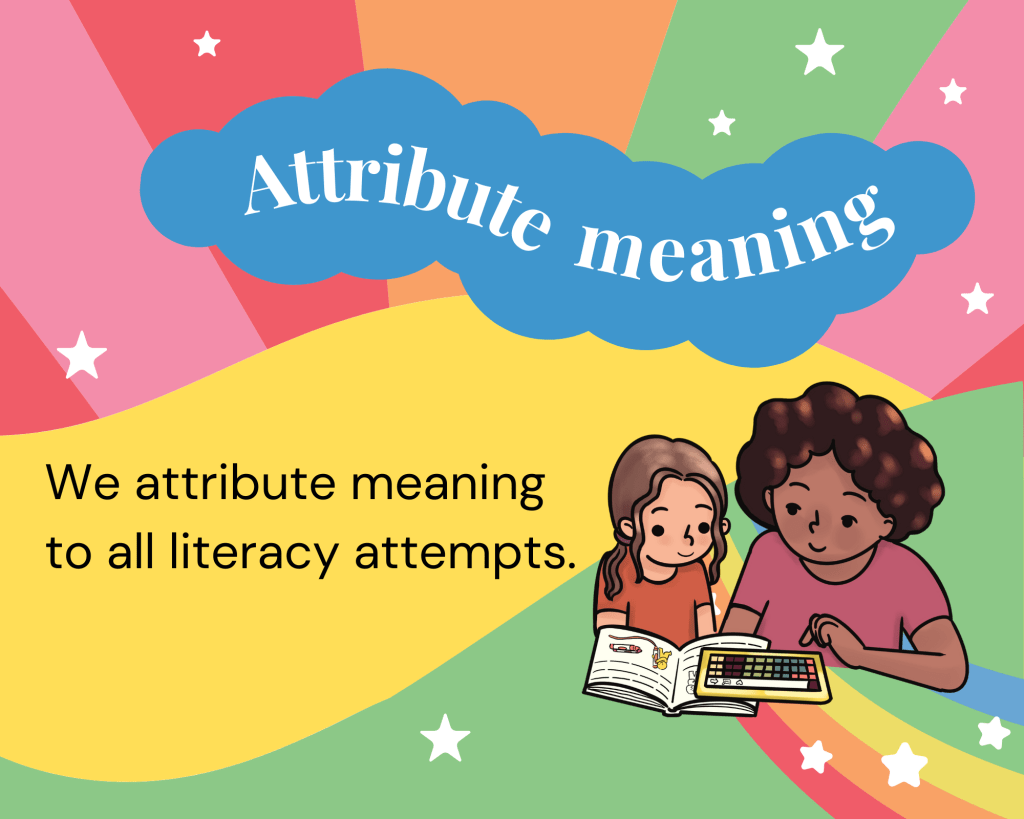
And of course, I would not be where I am without the Adult Literacy Superpowers established by Jane Farrall. I created these little posters in Canva to illuminate these Superpowers and serve as visual reminders to adults in the classroom.
Tab 2 – Letter Tracking
Trying to keep track of what letters we’d gotten through (and which we’ve missed due to disruption in routines or support needs in the classroom) was really frustrating to me as a teacher juggling many different kids with many different needs, and unforeseen circumstances that naturally arise in a special education classroom. I made this document to help track, record, and reassign letters as we work through our Letters and Sounds lessons throughout the year.
Enter: My Letter Tracking Template.
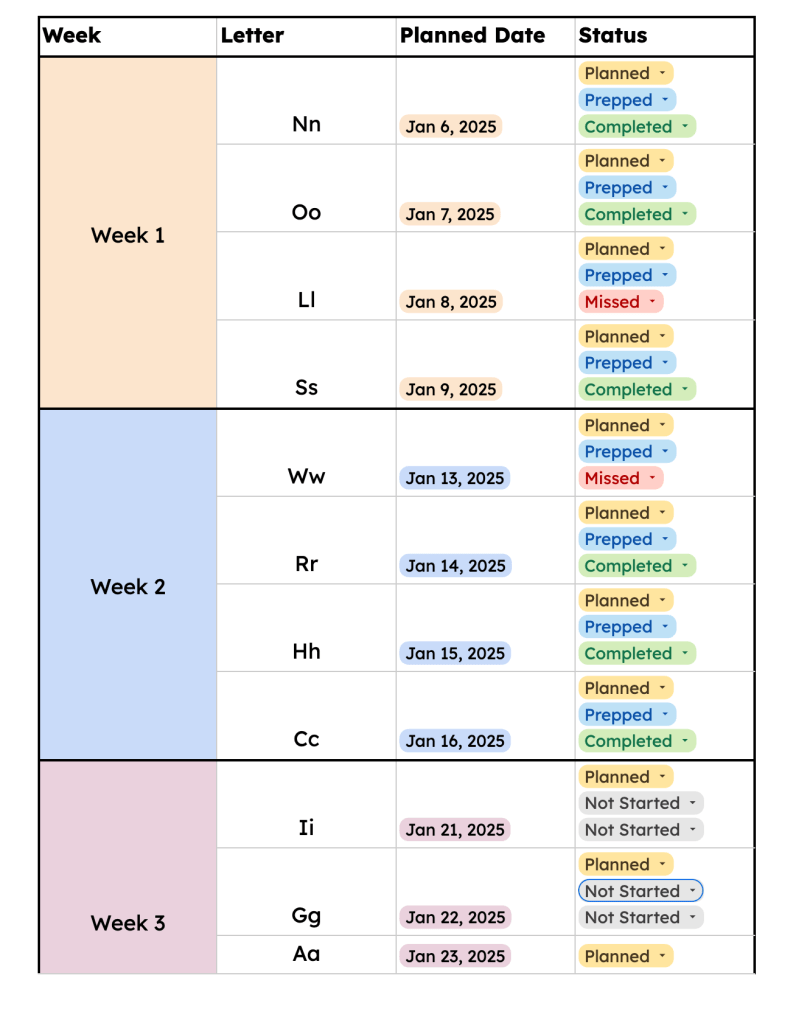
I like to organize my lessons in terms of “Week #” rather than with a specific date; this just works better for my brain and allows me to adjust as needed. Instead, I assign letters to Planned Dates within the week (which also makes it simpler for short weeks.
You might notice that I only have 4 letters a week. I noticed that we rarely were able to get through our dedicated Letters and Sounds block each single day. Regulation support needs, staff/student absences, meetings, field trips, assessments, related services… All these unpredictable or inconsistent schedule changes meant that I was often planning and prepping an extra day or two that just didn’t get completed.
Now, I plan four days a week (on 5-day weeks) and use the Friday day as either a make up day for a missed letter or as an opportunity for letters and sounds extension. I included a Status column to help me track what status the planned letter focus of that day is in. “Planned” means that I have a written plan for what to do with that letter on that day. “Prepped” means I have the materials printed, gathered, or otherwise ready to be used. Obviously, “Completed” letters have been taught (either on the assigned day or on the Friday Make-Up day) and “Missed” letters were not covered in that week.
This helps me so much when I go to plan for the next Set or month: I start by going through the previous Set and pull the Missed letters for my first Week of that set. These letters are already planned, and often are already prepped, so I also gain some valuable planning time to spend elsewhere, AND I can be sure we are providing opportunities for practice with all letters and sounds.
Tab 2 Subtab 1 – Weekly Plan
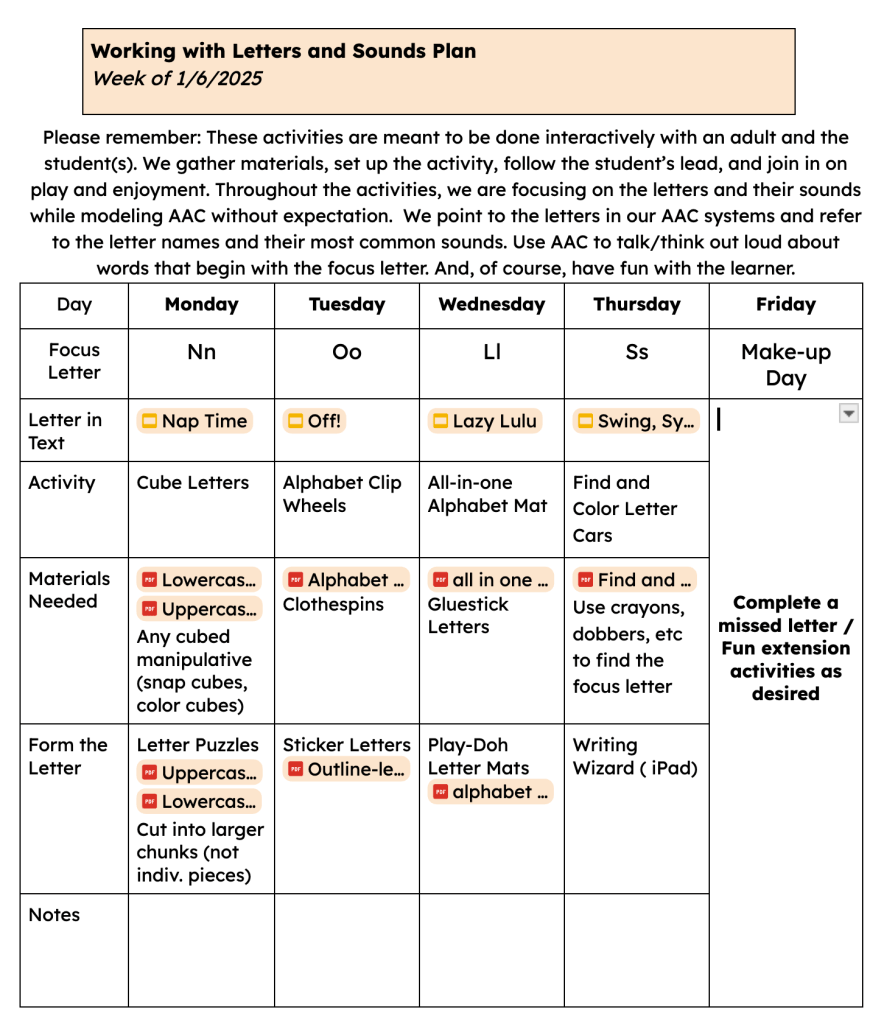
Here is an example of how I used the Template to plan for my Letters and Sounds block for Set One Week One.
We try to include a hands-on sounds activity and a letter formation activity for each letter daily. Of course, this block is explicit instruction in addition to providing a literacy-rich classroom environment with many opportunities for natural interactions and practice with Letters and Sounds.
We also practice finding the letter in various texts. I always provide a specific text that uses the letter, but we have access to many letter books and other texts can that be easily pulled to cater to individual needs and interests.
We use a variety of activities to support engagement and are flexible and student-led when offering activities. ANY engagement with letters can be assigned meaning by the supporting adult.
Tab 3 – Activity Bank
Okay, here is the Big One. This was easily the most time consuming part of this process, but is also the most effective way I’ve found to organize and access the dozens and dozens of activities I have. From hands-on activity mats to multi-use letter outlines, having easy access to my resources frees up a lot of my mental load for planning.
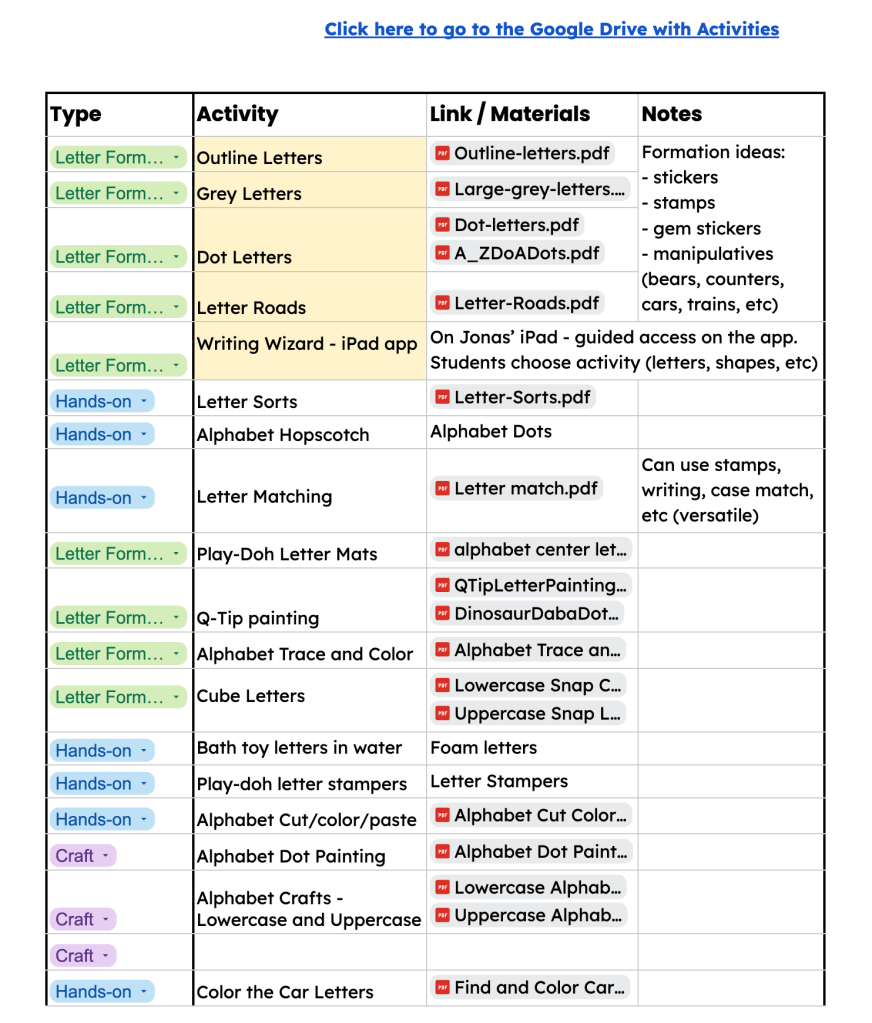
Let’s work from left to right on this table and talk through what you are seeing and how it has been helpful for me. The first column is labeled “Type” and has a dropdown status box like our Letter Tracking page. In this column, however, I wanted to track what type of activity each resource is so that I can quickly find relevant activity types (a formation activity versus a craft, for example). You can edit the types to be anything that makes the most sense for you and your classroom, but so far these are the categories that my activities have fallen into: Letter Formation, Hands-On, and Craft. I also have categories for Phonics and Low-Prep, but use these less often; eventually, I’d like to be able to categorize activities based on the Phonological Awareness Skill it targets, but that is for another time.
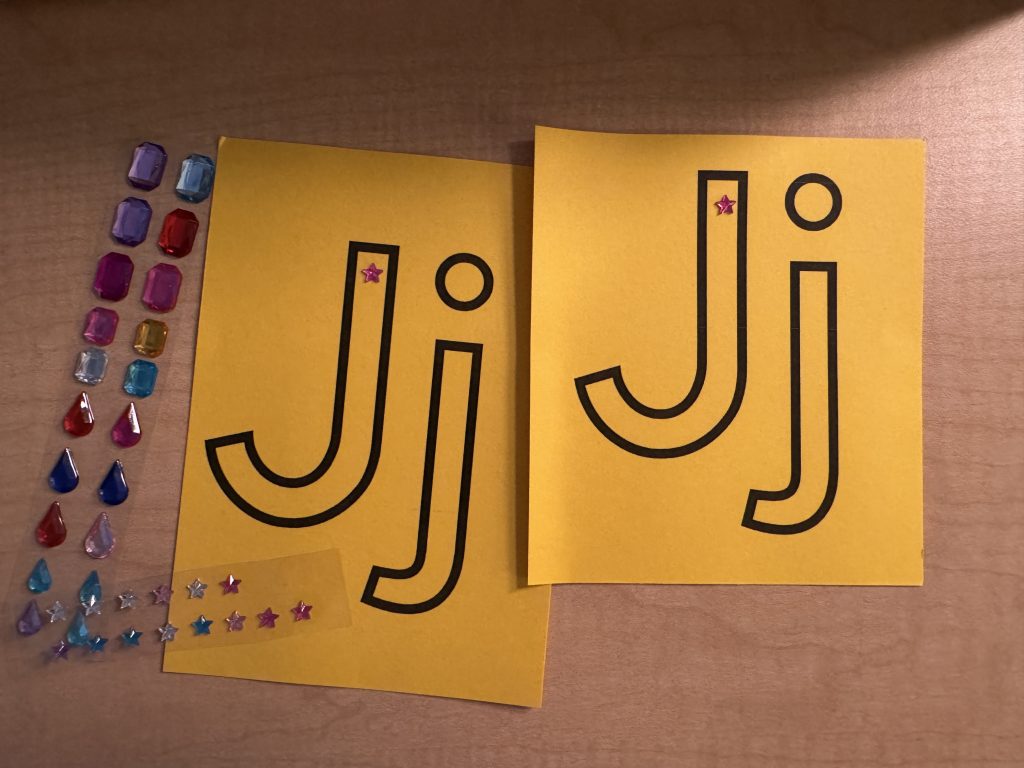
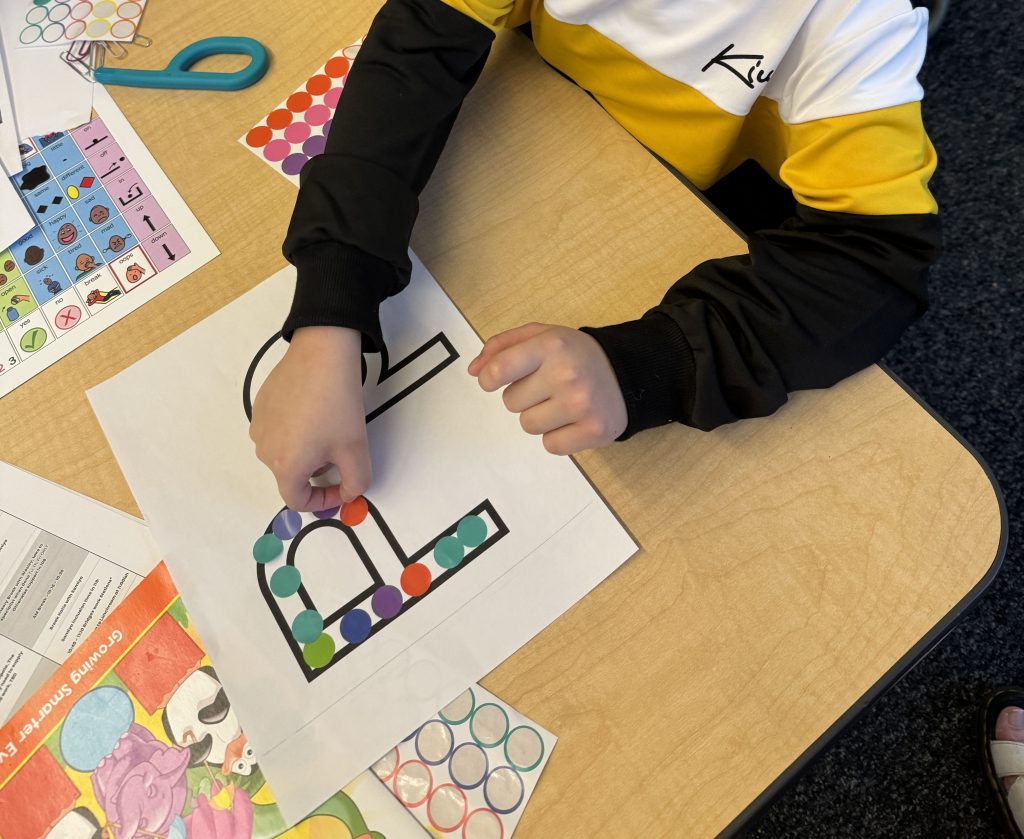
Next up is the Activity name or description. The first 5 rows are frequently used formation activities as they include different types of outlined letters or block letters that we use in different ways throughout the year. I list some ideas for different letter formation for the block letters such as dot stickers, stamps, and manipulatives.
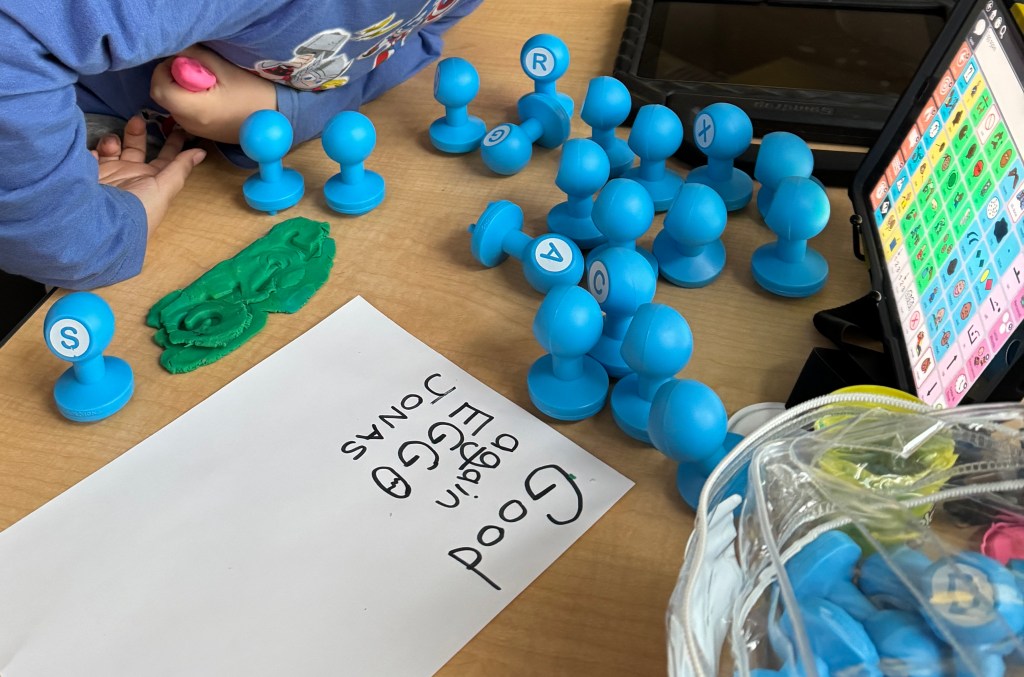
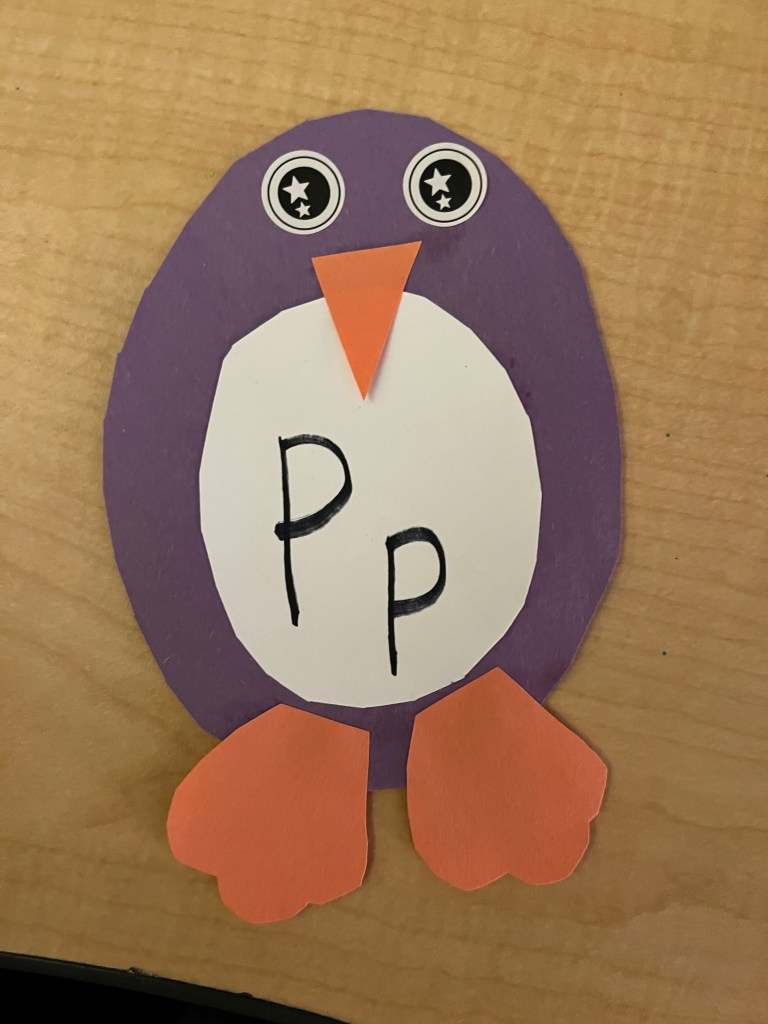
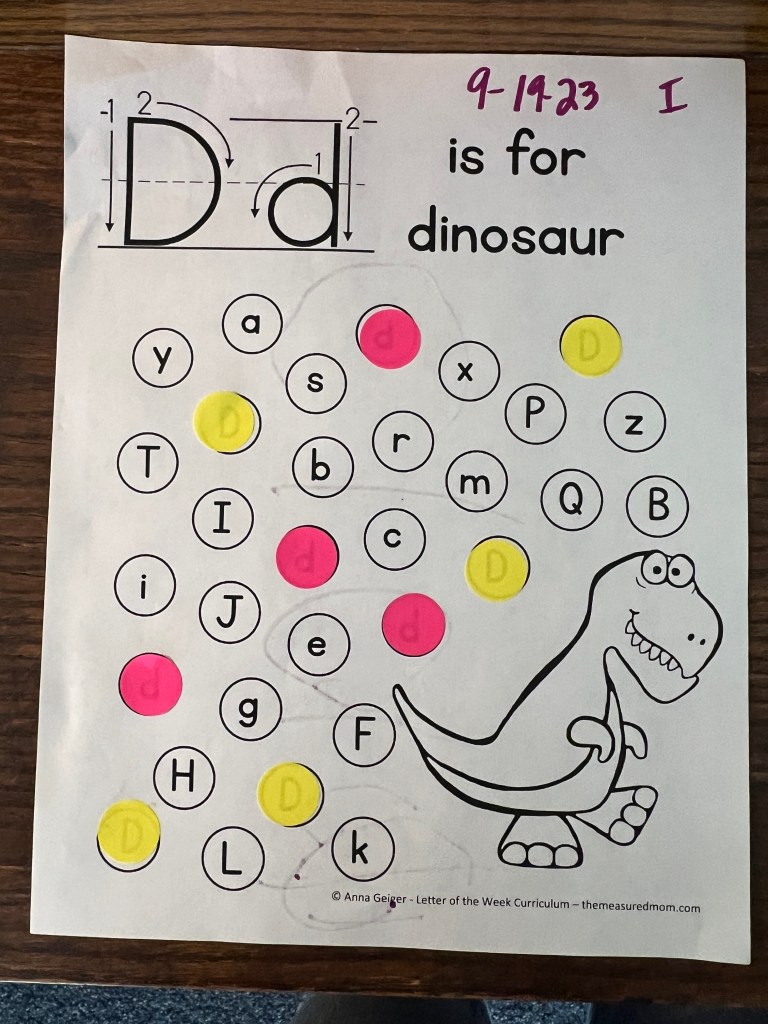
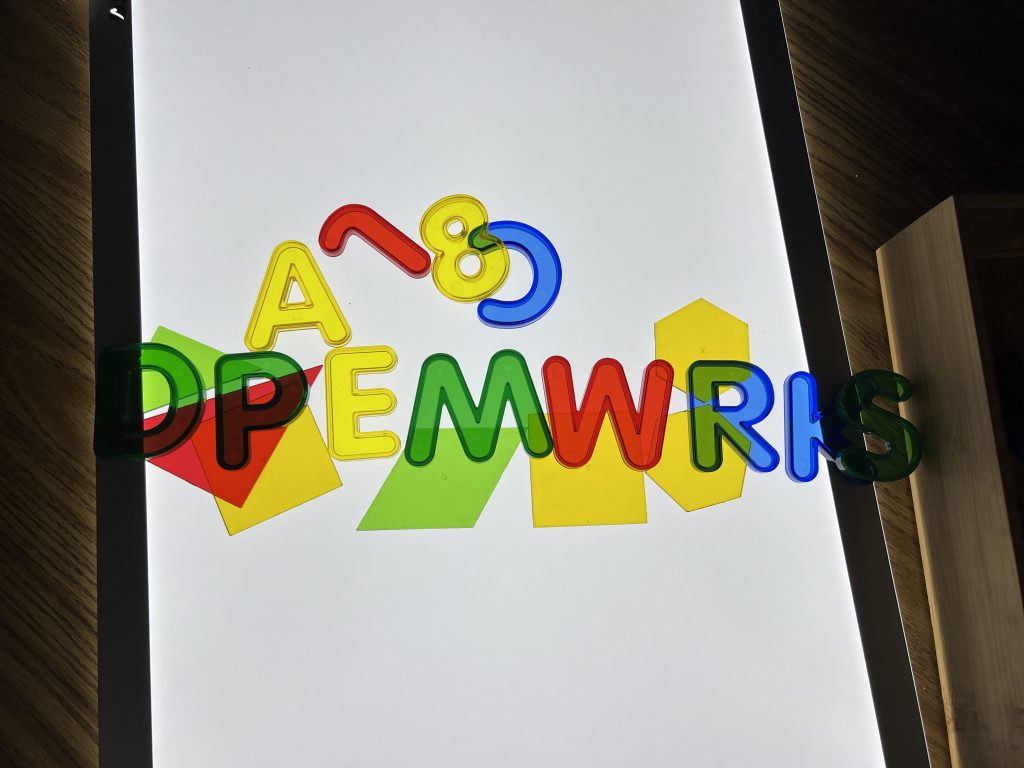
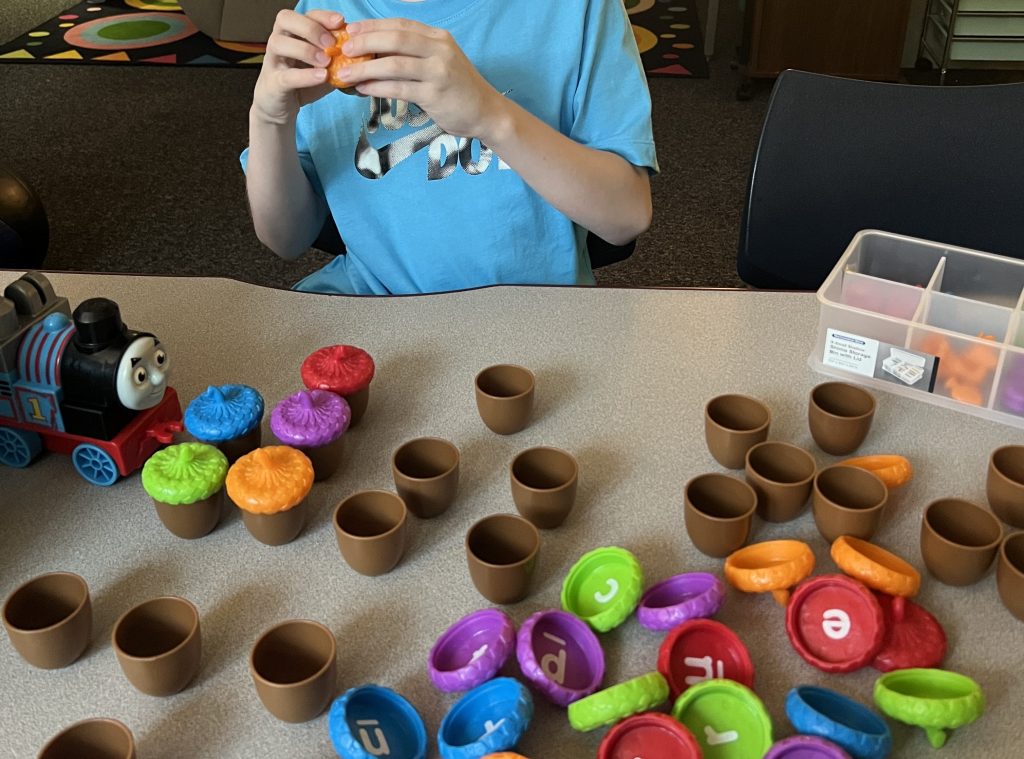
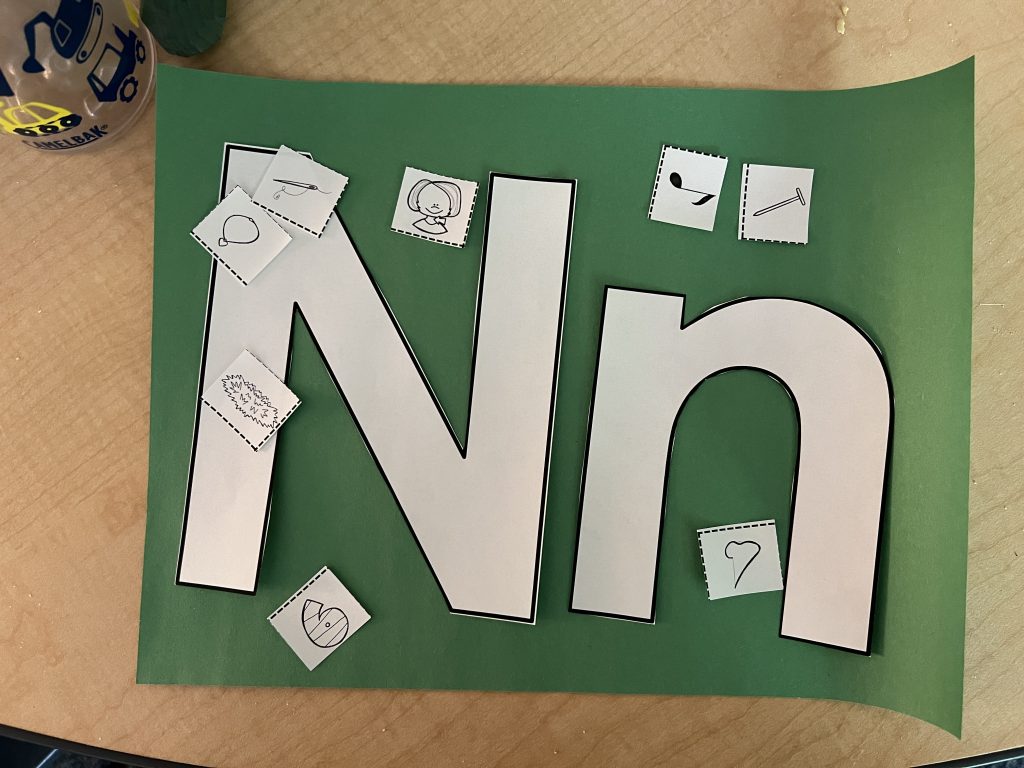
The third column includes direct links to the activity listed. I use Google Drive to store and organize all my Letters and Sounds activities, and I link those Drive materials into this column. Simply use the share function on each document to get a link and post it into the cell. You can then use the TAB key on your keyboard to create a nice, neat shortcut link. This makes organizing my Letters and Sounds planning more efficient as I just open up my Weekly Planning and Activity Bank on a split screen and pull over the links using Copy/Paste and then it’s all organized for me to print and prep. Of course, not all my activities require something to be printed, so I also have some cells that just list materials that are needed for the activity. Check out the photos below to see some of the activities in action in my classroom!

 The Authentic Classroom Project
Leave a comment